
How to Choose the Best Tanzania Park for Photography

Published by Gabriel in 3. Good to know · Thursday 30 Apr 2026 · 7 minutes
Tags: Tanzania, safari, planning, Tanzania, wildlife, photography, choosing, a, Tanzania, national, park, Tanzania, photographic, safari, Northern, Tanzania, safari, Southern, Tanzania, safari, Serengeti, photography, Ruaha, photography, Tanzania, birdwatching, African, safari, guide
Tags: Tanzania, safari, planning, Tanzania, wildlife, photography, choosing, a, Tanzania, national, park, Tanzania, photographic, safari, Northern, Tanzania, safari, Southern, Tanzania, safari, Serengeti, photography, Ruaha, photography, Tanzania, birdwatching, African, safari, guide
Choosing where to go on safari in Tanzania is not simply a matter of selecting the park with the most famous name.
Serengeti and Ngorongoro are recognised around the world, but a wildlife photographer may also find exceptional opportunities in Ruaha, Nyerere, Katavi, Tarangire or Lake Natron. Each destination offers a different combination of wildlife, landscapes, light, crowd levels, birdlife, accessibility and cost.
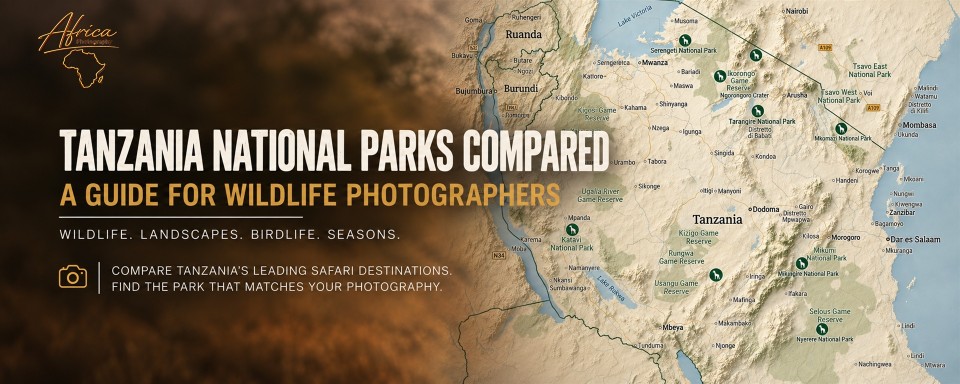
That is why I created a detailed comparison of Tanzania’s principal national parks and wildlife areas from a photographer’s perspective.
The objective is not to declare one park universally better than another. It is to help travellers understand which destination best matches their interests, photographic style and expectations.
Why the Most Famous Park Is Not Always the Best Choice
A famous park may offer excellent wildlife but also more vehicles, less freedom around sightings and higher seasonal prices.
For a first safari, destinations such as Serengeti and Ngorongoro provide a strong introduction to Tanzania’s wildlife. They offer excellent opportunities to see large mammals, predators and iconic landscapes.
However, photographers returning to Africa—or travellers who value quietness and wilderness—may prefer destinations such as Ruaha, Nyerere or Katavi.
The best choice depends on what matters most to you.
Do you want the highest possible concentration of animals? Are you looking for big cats? Do you prefer dramatic landscapes? Is bird photography important? Would you accept more complex logistics in exchange for fewer vehicles?
These questions are often more useful than simply asking which park is “best.”
Wildlife Density Is Only One Part of the Decision
Wildlife sightings naturally matter, but the number of animals alone does not determine the quality of a photographic safari.
A crowded sighting with ten vehicles may offer less photographic freedom than a quieter encounter in a remote park. Likewise, an animal surrounded by distracting vehicles or vegetation may be more difficult to photograph than one seen in a clean, open landscape.
I therefore consider several elements together:
- potential for predators and large mammals;
- diversity of species;
- quality of backgrounds;
- landscape character;
- available light;
- crowd levels;
- time and positioning around sightings;
- season and vegetation;
- birdlife;
- logistical cost.
This broader view produces a more realistic assessment of photographic value.
Compare Landscapes, Light and Backgrounds
The landscape influences every wildlife photograph.
The Serengeti offers open plains, distant horizons and dramatic migration scenes. Tarangire is known for baobabs, elephants and dry-season landscapes. Ngorongoro provides a unique crater environment, while Lake Natron offers volcanic scenery, flamingos and unusual colours.
Ruaha combines rocky hills, dry riverbeds, baobabs and warm seasonal light. Nyerere introduces rivers, channels, woodland and boat-based photography. Katavi offers a particularly remote wilderness atmosphere with floodplains, buffalo, hippos and dramatic dry-season concentrations.
These differences affect composition as much as the animals themselves.
A destination with fewer sightings may still offer stronger images when the environment, light and background are exceptional.
Consider Vehicle Numbers and Time at Sightings
For photography, vehicle pressure can be decisive.
In heavily visited areas, several vehicles may gather around a predator or other important sighting. This can restrict positioning, influence backgrounds and reduce the time available to wait for behaviour.
Less-visited parks usually provide more space and a slower rhythm. This can make it easier to remain with an animal, observe subtle behaviour and wait for better light or composition.
This is one reason Southern Tanzania plays such an important role in my photographic safaris.
Ruaha, Nyerere and Katavi may involve greater travel costs or more complex flights, but they often reward photographers with quieter encounters and a stronger feeling of wilderness.
Northern Tanzania or Southern Tanzania?
Northern Tanzania: Accessibility and Iconic Wildlife
Northern Tanzania is particularly suitable for first-time visitors and travellers who want to combine several famous ecosystems.
Serengeti, Ngorongoro, Tarangire and the Ndutu area provide strong wildlife diversity, classic African scenery and excellent predator opportunities.
The region is also comparatively easy to combine into a single road-and-flight itinerary.
The disadvantages can include higher visitor numbers during peak periods and less flexibility around popular sightings.
Southern Tanzania: Wilderness and Fewer Vehicles
Southern Tanzania offers a different experience.
Ruaha and Nyerere are larger, quieter and less frequently visited than the best-known northern parks. Katavi is even more remote and requires additional logistical commitment.
These parks may not always provide the same immediate density of sightings as the busiest northern areas, but they often offer more time, space and natural atmosphere.
For photographers, that can be more valuable than simply seeing the highest possible number of animals in one day.
Birdwatching and Bird Photography
Birdlife deserves separate consideration.
Tanzania supports more than one thousand recorded bird species, and different parks offer very different habitats and seasonal opportunities. The current comparison page includes birdwatching scores, indicative species numbers and recommended seasons for each destination.
Tarangire, Lake Manyara, Lake Natron, Ruaha and Nyerere can be particularly rewarding for birdwatchers, although the best destination depends on habitat, rainfall and migration patterns.
The period from approximately November to April is often attractive because of migratory species, breeding activity and greener landscapes, although bird photography remains productive throughout the year in many areas.
Season, Weather and Vegetation
The same park can offer a very different photographic experience depending on the month.
During the dry season, animals may gather around permanent water sources and become easier to locate. Vegetation is generally lower, but landscapes can become dusty and visually austere late in the season.
The green season offers richer colours, dramatic skies and greater bird activity, but taller vegetation and rainfall can make some sightings more difficult.
There is therefore no single perfect month for every photographer.
The best period depends on whether your priority is predator action, migration, elephants, birdlife, scenery, low visitor numbers or cost.
Cost and Logistical Efficiency
Remote does not automatically mean better.
Katavi, Ruaha and parts of Southern Tanzania may require internal flights and higher logistical costs. Serengeti can also become expensive depending on season, lodge choice and park-fee structure.
Other destinations, such as Mikumi or some bespoke northern routes, may provide good photographic value with simpler logistics.
The important comparison is not merely the total price. It is the photographic experience obtained for that price:
- private or shared vehicle;
- number of participants;
- time inside the park;
- vehicle design;
- lodge location;
- domestic flights;
- crowd levels;
- access to varied habitats.
These elements can influence the final value more than the advertised nightly rate.
Which Tanzania Park Matches Your Priorities?
There is no universal answer.
For iconic wildlife and a first safari, Serengeti and Ngorongoro remain powerful choices.
For elephants, baobabs and varied birdlife, Tarangire is highly attractive.
For river environments, boat safaris and a quieter atmosphere, Nyerere is distinctive.
For predators, landscapes and wilderness, Ruaha is one of Tanzania’s strongest photographic parks.
For remote dry-season wildlife and very low visitor numbers, Katavi offers an exceptional but logistically demanding experience.
For flamingos, volcanic landscapes and an unconventional itinerary, Lake Natron provides something completely different.
The best park is therefore the one that matches your photographic interests—not necessarily the park with the most famous name.
Explore the Complete Tanzania Parks Comparison
I created a separate detailed guide comparing Tanzania’s principal national parks and wildlife areas across:
- wildlife and big-cat potential;
- landscapes;
- crowd levels;
- cost efficiency;
- weather;
- wilderness atmosphere;
- birdwatching;
- bird photography;
- overall photographic value.
The guide includes Serengeti, Ngorongoro, Tarangire, Lake Manyara, Lake Natron, Ruaha, Nyerere, Katavi, Mikumi, Mkomazi and several less frequently visited destinations.
