
The Exposure Triangle in Wildlife Photography

Published by Gabriel in 2. Photography hint and ideas · Wednesday 30 Sep 2026 · 2 minutes
 Wildlife photography rarely gives us a second chance.
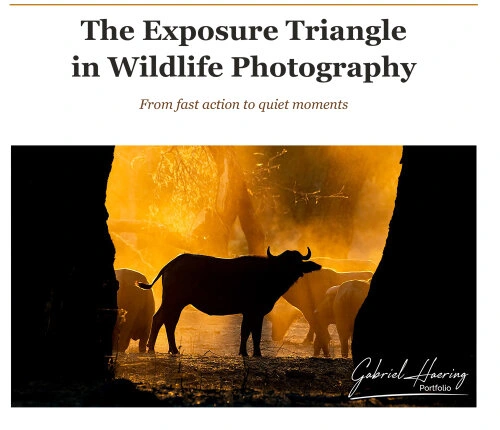
A bird suddenly takes flight. A lion raises its head for only a few seconds. An elephant walks through the dust just as the sun disappears behind the horizon.
In these moments, there is no time to reconsider every camera setting from the beginning.
This is why understanding the exposure triangle—shutter speed, aperture and ISO—is so important in wildlife photography. These three settings do much more than control whether an image is light or dark. Together, they determine whether movement is frozen, whether the subject separates from the background and whether the photograph preserves the atmosphere of the scene.
But there is one essential principle to remember:
The camera must follow the animal—not the other way around.
Inside the Complete Field Guide
The downloadable guide covers:
1. How to read the exposure triangle in wildlife photography
2. Birds in flight and sudden take-offs
3. Resting animals and quiet wildlife portraits
4. Walking animals, running predators and intense action
5. Groups of animals and depth of field
6. Low light at sunrise and sunset
7. Backlit animals and silhouettes
8. Animals photographed against a bright sky
9. White birds and other bright subjects
10. Wildlife portraits and background separation
11. Manual mode with Auto ISO
12. Six essential checks before the photographic moment arrives
Download the Complete Field Guide
The complete 16-page guide includes twelve real wildlife situations, practical starting settings, personal field notes, exposure-triangle diagrams and a six-point workflow to check before the photographic moment arrives.
Plan smart. Travel responsibly. Photograph with patience.*# The Exposure Triangle in Wildlife Photography