Go to content
Skip menu
Skip menu
Skip menu
Skip menu
Photographic Safari Workshops in Tanzania
A photographic safari is not only about being in front of wildlife. It is about being ready when light, behaviour and composition come together.

The workshop element of my Tanzania photographic safaris is designed to help participants improve before, during and after each day in the field. It combines practical field guidance, equipment preparation, daily image review, constructive discussion and post-production support.

The goal is simple: to help each participant return home not only with stronger images, but with a clearer photographic method.
A workshop built into the safari rhythm
The workshop is not a separate classroom course disconnected from the experience. It is integrated into the safari itself.

Each day brings real photographic situations: harsh light, soft morning light, backlight, dust, movement, behaviour, difficult backgrounds, birds in flight, animals in shade, silhouettes, portraits and wider environmental compositions.

These real situations become the basis for discussion and improvement.

Workshops are normally held:

- after lunch, when the group returns to the lodge after the morning game drive, or
- in the evening after dinner, depending on the rhythm of the day.

The timing is decided day by day together with the participants. If only one participant would like to work on images or discuss a specific topic, the workshop will still take place.

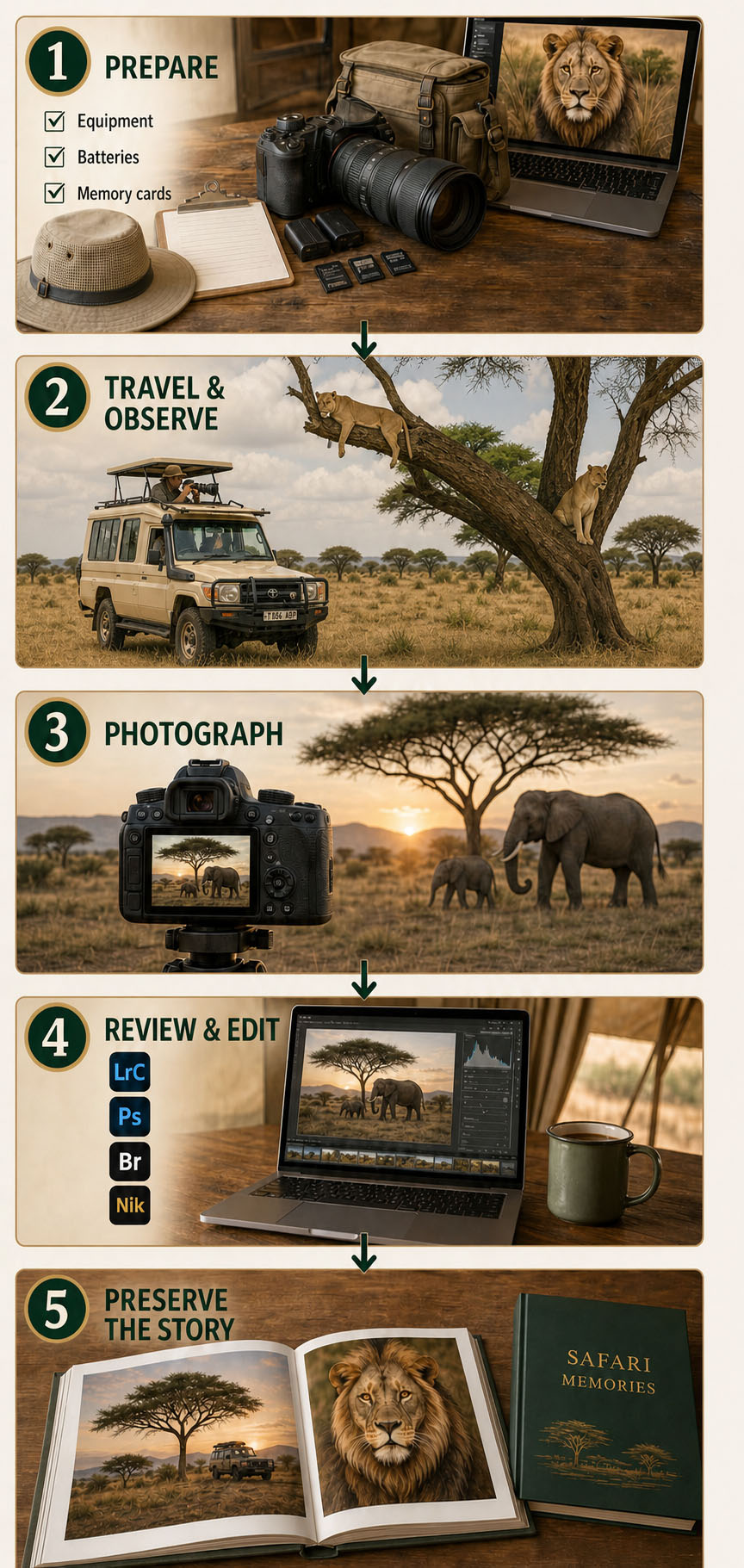
Before departure: equipment checklist and camera preparation

Before departure, each participant receives an extensive equipment checklist to prepare for the safari.

This includes practical suggestions on:

  • camera bodies and lenses
  • memory cards and storage
  • battery management and charging
  • beanbags and support
  • cleaning material
  • backup strategy
  • clothing and field comfort
  • travel accessories useful for photographers

Participants also receive initial hints on camera setup and tests to do before departure, so that the first safari day is not spent solving avoidable technical problems.

The objective is to arrive in Tanzania ready to photograph: equipment checked, camera settings understood, cards tested, batteries prepared and workflow already considered.

Equipment I use in the field

At the beginning of the workshop, I will show the photographic equipment I personally use on safari (see picture with main material).

This is not meant as a commercial recommendation, but as a practical introduction to how equipment choices influence field work.

The discussion can include:

  • camera bodies
  • telephoto lenses
  • zoom lenses for flexibility
  • wide-angle lenses for landscapes and environmental wildlife
  • beanbags and vehicle support
  • memory card strategy
  • backup system during travel
  • cleaning and protection against dust
  • field workflow between game drives

This helps participants understand not only what equipment to bring, but why each element matters in real safari conditions.

Daily image review and constructive discussion

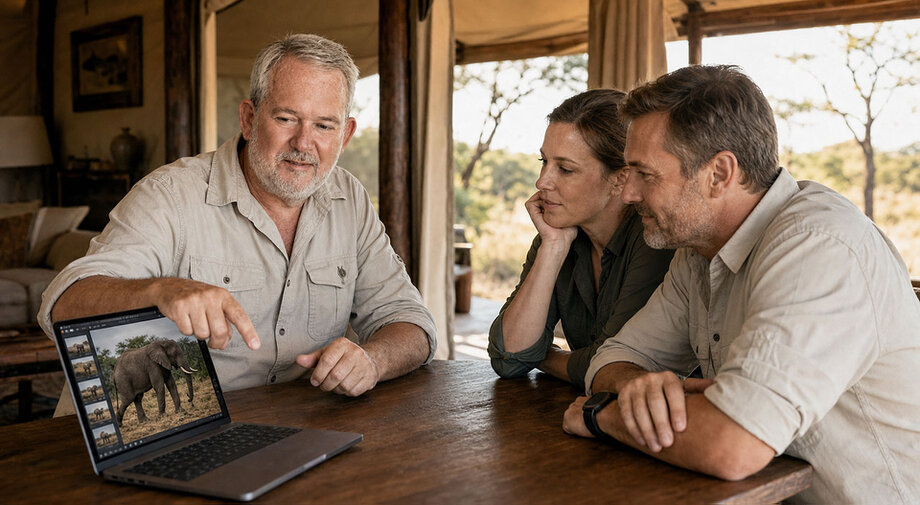
One of the most valuable parts of the workshop is the review of the images taken during the safari.

Participants can show selected photographs from the day, and we discuss them together in a constructive way.

The focus is on:
  • light
  • composition
  • background
  • sharpness
  • exposure
  • timing
  • animal behaviour
  • positioning of the vehicle
  • storytelling value of the image
  • what could be improved next time

All participants are encouraged to discuss the results of each other respectfully and constructively. This creates a continuous learning process throughout the safari.

The purpose is not to criticise, but to understand why an image works, why it does not work yet, and what can be changed in the field the following day.

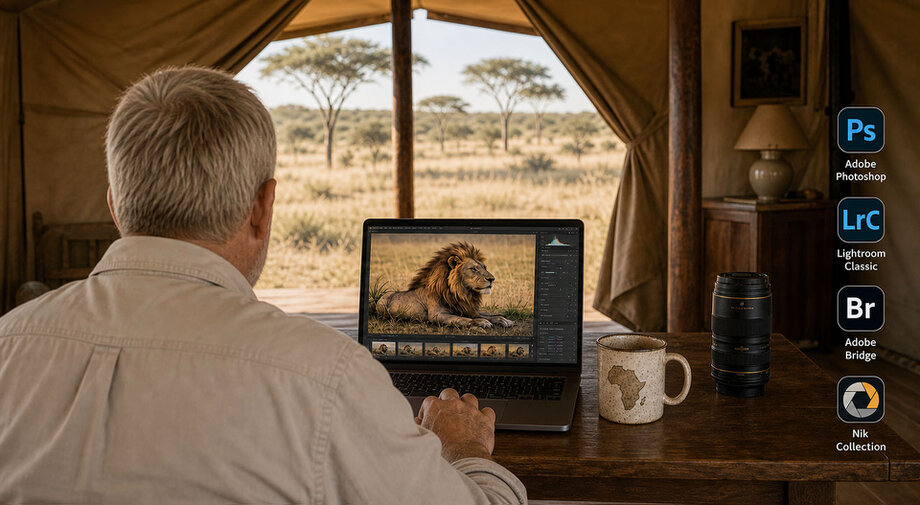
Post-production and image workflow

The workshop can also include post-production sessions depending on the interests of the participants.

Possible topics include:
  • RAW files and why they matter
  • image selection after a safari day
  • Adobe Bridge workflow
  • Photoshop basics for wildlife photography
  • Nik Collection for tonal contrast and image refinement
  • cropping and composition improvement
  • colour balance and atmosphere
  • noise reduction and sharpening
  • preparing images for web, printing or social media

The emphasis is on natural-looking wildlife photography. The goal is to improve the quality of the image while keeping the scene believable and respectful.

Topics adapted to the participants

The workshop is flexible. The content is adapted to the level, interests and needs of the participants.

Possible additional topics include:

  • photographing birds in flight
  • working with backlight
  • using silhouettes
  • exposing for white animals or dark animals
  • photographing from a safari vehicle
  • choosing between portrait and environmental composition
  • using slow shutter speeds creatively
  • building a visual story from a safari
  • editing a coherent image selection after the trip

Participants can also request specific topics before or during the safari.

For beginners and experienced photographers

The workshop is suitable for different levels.

Beginners can receive help with camera settings, exposure, autofocus, lens choice and basic composition.

More experienced photographers can work on refining their field approach: timing, patience, cleaner backgrounds, stronger storytelling, better editing choices and more consistent image selection.

The common point is the same: learning directly from real situations in the field.

A photographer-led safari, not only a workshop

The workshop is part of a broader photographer-led safari approach.

The safari remains focused on wildlife, light, behaviour, respect for nature and enough time at sightings. The learning happens naturally around the experience, not instead of it.

This is what makes the format different from a standard safari: the journey is designed for photographers and nature lovers who want to improve their images while experiencing Tanzania with patience and attention.
Back to content